|
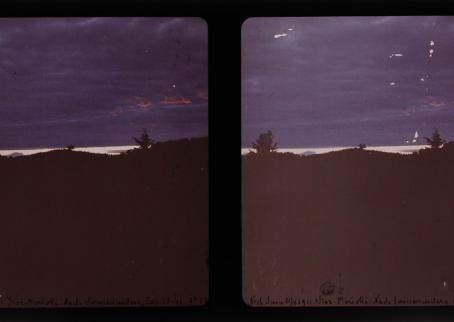
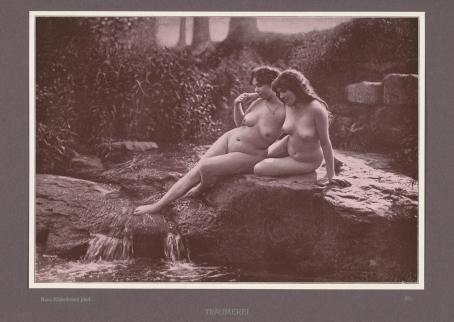
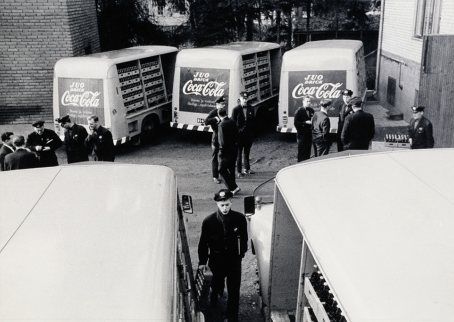
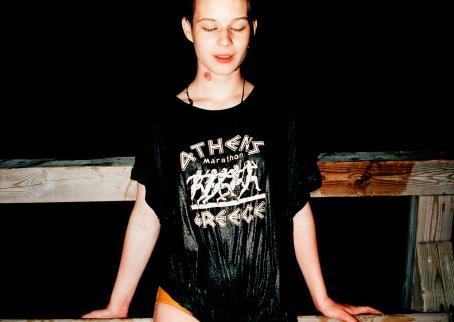
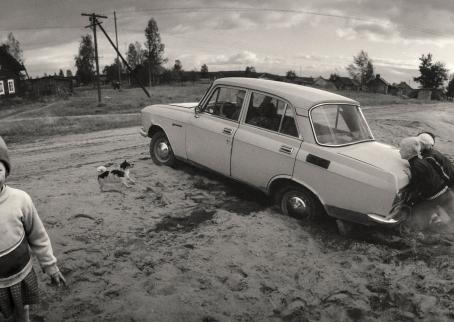
The Finnish Museum of Photography houses both photographic art and photographic culture in its collections. Among them are works of photographic art, photojournalism, fashion shots, press photos and portraits, by both professionals and amateurs. The museum has a total of 3.7 million prints and negatives.
The collection of the Finnish photographic organizations and the international art photography collection of the former SYP bank form the cornerstone of the museum´s collections. The picture archive of 2.5 million negatives from Uusi Suomi newspaper from 1927-1995 is an important collection of press photographs. The museum´s collection is constantly growing through donations and acquisitions.
Martin Parr: Tupperwareparty, Salford, Manchester, 1985
Picks from the Collection
Picks from the Collection is the series on the Museum’s website, which presents photographs belonging to the collection in both pictures and words.
A SELECTION OF VISIT CARDS FROM 1860’S TO 1920’S
Selection of the visit cards from different decades. From up: Atelier C. A. Hårdh, Helsinki, 1870's. Atelier Eric Sundström, Helsinki, c. 1900. Actress Ida Aalberg as Maria Stuart, Atelier Fritz Hjertzell, Helsinki, 1880. Atelier Apollo, Helsinki, c. 1905-10. The logos of ateliers: Atelier O.J. Aune, Turku, 1870's and Atelieri Daniel Nyblin, Helsinki, 1890's.
Portrait of an unknowm man. Atelier Eric Sundström, Helsinki, visit card. 1900
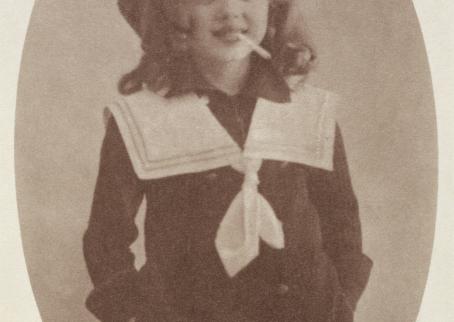
Portrait of an unknown child. Atelier Apollo, Helsinki, 1905-10.
Photography production first achieved industrial proportions with the spread of visiting cards in the second half of the 19th century. A photograph was a unique memento. People collected and exchanged visiting cards with their circle of acquaintances, giving rise to family-album culture. The name of the person in the picture is sometimes written on the card, but most of the people appearing in these visiting cards are unidentified.

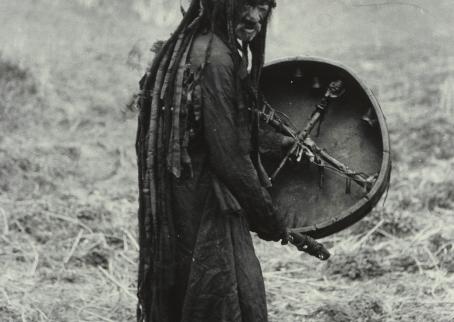
SAKARI PÄLSI (1882–1965), Finland Shaman Otshir-böö, Bajangol valley, Mongolia, 1909 / 1985 Shaman equipment, 1909 / 1985 , gelatin silver prints, made by Jussi Aalto The original negatives belong to the National Board of Antiquities’ Archives for Prints and Photographs. The prints were made for the 1986 major exhibition Minne? Suomalainen valokuvataide 1842—1986 (Finnish Art Photography 1842-1986).
The linguist G.J. Ramstedt and the archaeologist Sakari Pälsi made an expedition to Mongolia in 1909. A gifted amateur photographer, Pälsi was there not only as an archaeologist, but also in the capacity of photographer. He recorded the actual subjects of the archaeological research done on the journey, while also photographing the steppe landscapes and local people, and the life of the nation in squares and monasteries. You can read about the meeting with the shaman Otshir-böö in Pälsi’s book Mongolian matkalta (from a journey to Mongolia) 1911.
FRITZ ENGLUND (1870–1950), Finland Iris, 1910’s, carbon print Donated as part of a larger collection of prints in 1990
“What would it be like to be a mischievous street urchin?” That thought may have crossed Iris Englund’s mind as she posed for her father Fritz Englund. An active, experimental amateur photographer, Englund printed the picture in soft, hazy tones. This made the photograph more like a painting or graphic print, accentuating the artistic effect.

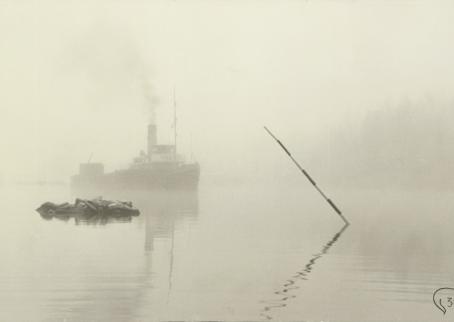
VILHO SETÄLÄ (1892–1985), Finland Fascination of speed, 1936, gelatin silver prints Autumn fog, Helsinki, 1939, gelatin silver prints The prints were donated by Vilho Setälä.
“Showing movement and physical exercise means both man and camera have to be ready for action,” photographer, non-fiction author and researcher Vilho Setälä writes in his Valokuvaus tieteenä ja taiteena (photography as science and art, 1940). Another challenge is capturing slow, imperceptible motion, such as that of a steamship gliding through early-morning mist. The movement is amplified by the sloping boom in the foreground, which, together with its mirror image, forms an arrow pointing in the direction the ship is heading.

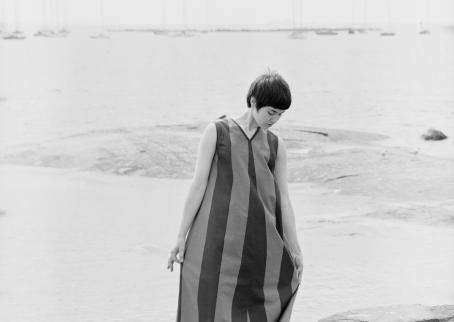
KARL-GUSTAV (K-G) ROOS (1937–1976), Finland Vuokko Nurmesniemi’s Asumistakki (Habitation coat), 1957 gelatin silver print Vuokko Nurmesniemi’s Alkupaita (Beginning shirt), 1957 / 2011 ink jet print, digitalised negatives Donated in 1986
These shots taken of Vuokko Nurmesniemi’s dresses by K-G Roos for Marimekko in 1957 represent the very latest in the Finnish fashion photography of their day. They were taken outdoors in natural light: on the shores of Helsinki, in Kaisaniemi Park, on Seurasaari Island, and in Seutula. The pictures were intended to embody naturalness and directness, not something suited to mannequins prancing about in front of a backcloth in a studio. Instead, an attempt was made to give the pictures the feel of real situations.


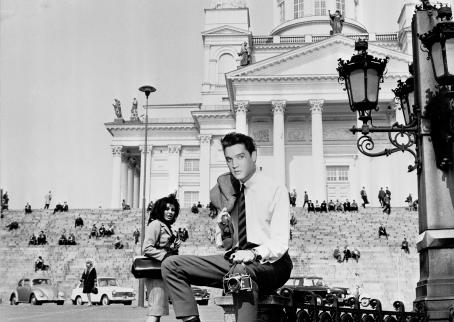
FOTO JATTA, Finland Elvis in Helsinki, 1963 / 2011, ink-jet prints, digitalised negatives An extensive photography-agency negative archive donated in 2008.
Editor-in-Chief Isto Lysmä wrote an article in Suosikki (favourite) magazine in summer 1963: “Elvis Presley vieraili 29.6. Helsingissä” (Elvis Presley visited Helsinki 29.6.). Two photographs printed in the magazine bear witness to the megastar’s visit. Negatives found in photo agency Valokuvaamo Foto Jatta’s archive reveal how these pictures were made: photos of an unknown assistant and of Elvis Presley were combined using reprography, cutting and pasting. The print-outs in the exhibition are of the manipulated image and of the pictures used to make it.
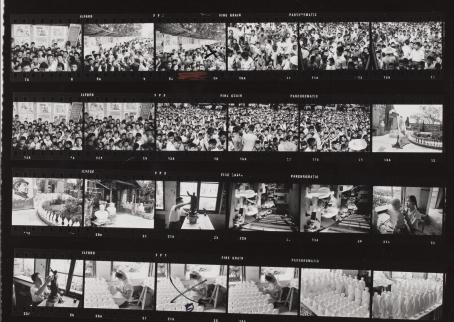
KARL-GUSTAV [K-G] ROOS (1937–1976), Finland China, 1967, gelatin silver prints Donated in 1986
An entire 36-frame roll of 35mm film has been printed onto a contact sheet. A ‘contact’ is a photograph made by printing the negative directly onto paper without enlarging it. This is intended to make it easier to look for and select frames to be printed as finished enlargements. This photograph, taken in the workshop of a factory that made statues of Mao, is one of the frames of the film printed on the contact. In 1967, K-G Roos was among the first western journalists in China after the start of Mao’s cultural revolution.
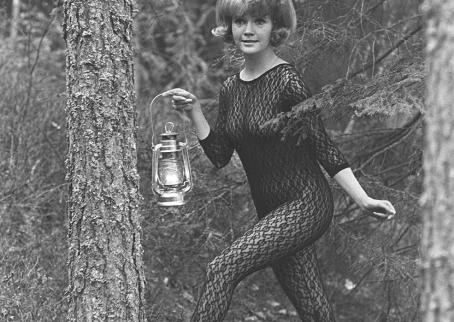
KALLE KULTALA (1924–1991), Finland Somero, 1965 / 1975, gelatin silver print Finnish Museum of Photography This print belongs to a collection acquired by the Finnish State and donated in 1995.
A fashion piece published in Suomen Kuvalehti magazine in May 1965, “Uusia pitsejä ilman arsenikkia” (new lace without arsenic) was shot at a summer cottage by photographer Kalle Kultala. The title of the article refers to the stupefying, albeit non-toxic, effect of lace patterns. “Here we go, lace from head to toe. The outfit is also unique in that it doesn’t actually serve any practical purpose. It’s called a body stocking. That’s wrong…” Pirkko Kolbe, Suomen Kuvalehti no. 21, 22.5.1965.
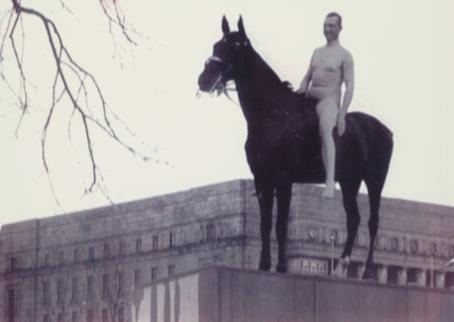
KALLE KULTALA (1924–1991), Finland Helsinki, 1970 / 2011, Ink-jet prints, digitalised negatives The negatives belong to a collection acquired by the Finnish State and donated in 1995.
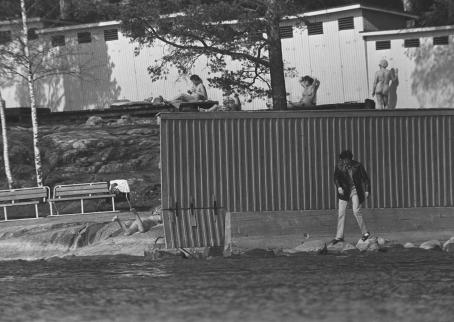
In June 1970, Apu magazine published an article illustrated by Kalle Kultala and written by Eero Kyllijoki: “Mitä kaikkea voi nähdä näin kesällä Helsingissä mereltä käsin” (Everything you can see from the sea in summer Helsinki). The writer tells the tale of a boat trip made by three pals on the shore waters around Helsinki: “Kalle had a camera with him and some fiendish-looking long tubes. They were what are called telephoto lenses and you can get shots from a long distance with them. I had with me some salami, beer sausage, half a kilo of tomatoes, two bottles of Vichy water and six bottles of cider.” Kultala captured a Peeping Tom a hundred metres away, sneaking around behind the fence at the Seurasaari nudist beach. At the same time, he unashamedly took snapshots of the naked women on the beach.
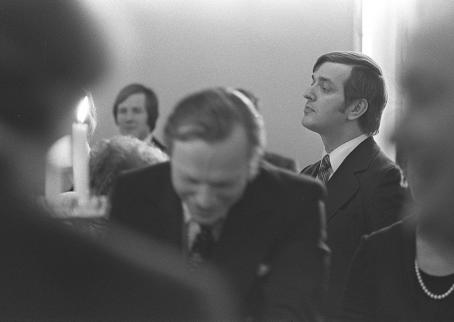
KALLE KULTALA (1924–1991) Finland Paavo Väyrynen at the opening of Parliament season, 1976, gelatin silver print This print belongs to a collection acquired by the Finnish State and donated in 1995.
Minister of Education Paavo Väyrynen was only 30 years old, but already an experienced politician. He was President Kekkonen’s trusted ally, and his career was predicted to continue its meteoric rise. Kalle Kultala was ‘Kekkoslovakia’s’ number-one photographer, and his camera followed the President along forest tracks and on long-distance journeys. Press photographer Kultala was at his best when working among politicians and other wielders of power. So it is hardly a surprise that he was rewarded for his achievements with the Pro Finlandia medal, or that 200,000 of Kultala’s photographs were archived on the initiative of the Ministry of Education.
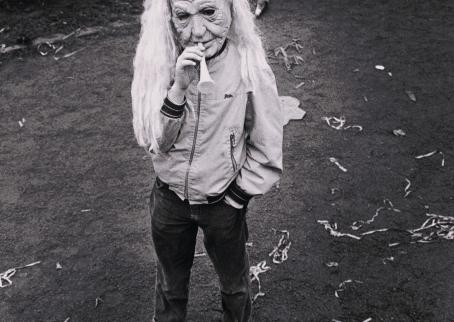
MERJA SALO (b. 1953) Finland Helsinki, 1980’s, gelatin silver print Finnish Museum of Photography Print bought in 1985 as part of the exhibition “26 photographers”.
Carnivals are rare in Finland, but on May Day people go out into the streets and squares in droves. Dressing up and wearing masks is all part of the fun. “There is something fascinating about masks: what role or guise does the person want to take on, what do they want that moment to reveal? The disparity between the mask and the rest of their persona is interesting, and something that they themself may not realize – it only comes out in the picture.” - Merja Salo, 2010
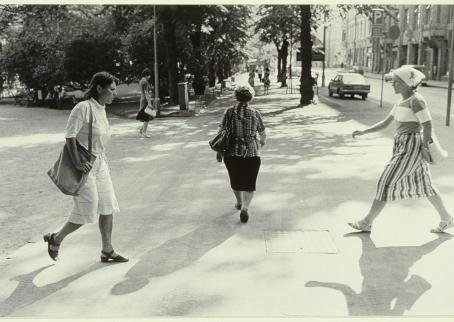
JOUKO LESKELÄ (b. 1956) Finland Esplanade, 1980, gelatin silver print Donated for the large-scale Minne? Suomalainen valokuvataide 1842—1986 (Finnish Art Photography 1842–1986) exhibition in 1986.
For Jouko Leskelä, street photography means snapping pictures freely and staying alert while he is in the street. “Three women walking at the same pace in different directions. The great joy of traditional film is that you only notice the most thrilling snapshots once they have been developed. A dance-like moment, just one frame – a sliver of time so brief that it doesn’t have time to stick in your mind as an image, but is only discovered by surprize in the film. Did I take that?” - Jouko Leskelä, 2009
BEN KAILA (b. 1949), Finland Helsinki, 1982, gelatin silver prints Larger print acquired in 1997, smaller print donated to the photo agency Gorilla’s collection in 2009.
Two prints of the same picture. One was acquired for the Museum’s collection of works and has been handled with cotton gloves. The other is a commercial image available through the photo agency Gorilla, and may, for instance, have been printed in brochures or adverts. Gorilla, which began operations in 1987, was a photo agency owned by the photographers themselves, with Ben Kaila being one of the founder members.
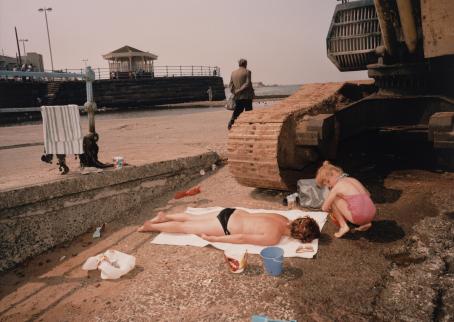
MARTIN PARR (b. 1952), Great Britain New Brighton, Merseyside, from series The Last Resort, 1983–1986 chromogenic colour print The work is from the Union Bank of Finland collection, which was donated to the Museum in 1995.
The photos in The Last Resort series were taken in England’s traditional New Brighton beach resort. The place, which enjoyed its days of greatest splendour at the start of the 20th century, has declined over the years. “I'm glad that I'm showing this run-down area, because I'm also interested in making the photographs work on another level, and showing how British society is decaying; how this once great society is falling apart.” - Martin Parr, 1992

PETTERI BÜLOW (b. 1961), JUHA SAARI (b. 1964) & TOUKO YRTTIMAA (b. 1947), Finland Little prince, 1990, print Tie-break, 1990, print Acquired in 1998
Petteri Bülow, Juha Saari and Touko Yrttimaa’s digitally manipulated photographic works have been made using the ‘Quantel Paintbox’ in YLE, the Finnish Broadcasting Company’s, newsroom. The pictures were displayed in May 1990 in the exhibition M - kaupunki etsii manipuloijaa (M – the city seeks a manipulator) at Laterna Magica gallery, where digitally produced works were shown for the first time in Finland.

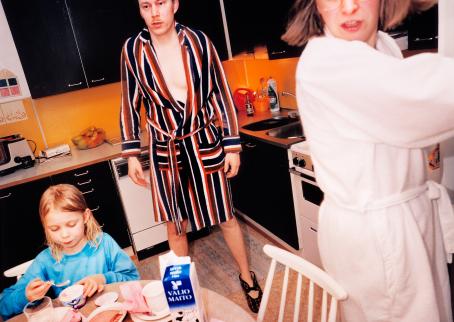
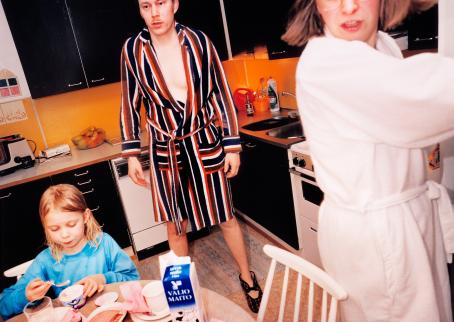
MARKUS JOKELA (b. 1952), Finland Kirkkonummi, 1992 chromogenic colour prints The prints are from a set partly purchased and partly donated in 1997.
Markus Jokela, together with journalist Ilkka Malmberg, has made reportages about ordinary Finnish everyday life for Helsingin Sanomat newspaper’s Kuukausiliite (monthly supplement). In the pictures junk is left lying around, while the camera flash sprays out an even light. “For me photoreportage is the king of journalistic genres. In photoreportage the pictures do not have to scream out a simplified truth.” - Markus Jokela, 2008
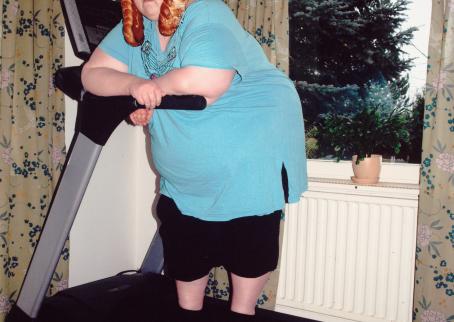
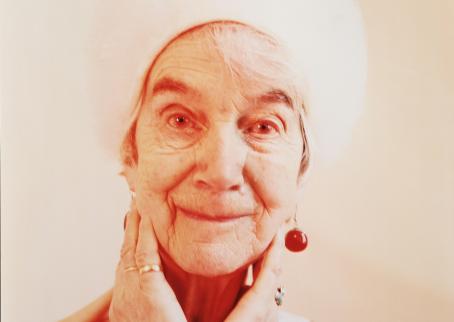
HANNA WESELIUS (b. 1972) Finland Mary in Wedding Costume, London, 1997–1998 chromogenic colour print Acquired in 1999 from the exhibition Honeypot Lane
Mary, who was about 80 when the photograph was taken, is an ex-Catholic nun who used to wander around flea markets looking for elegant outfits. The clothes in the picture were a recent purchase for some friends’ wedding. “Old people’s lives, like anything else, are the way they are portrayed.” - Hanna Weselius, 1999
|